Rabe Meaning Slang Full Definition, Origins, and Modern Usage

Language changes fast online. Every year, new slang words appear across social media, text messages, and internet culture. 

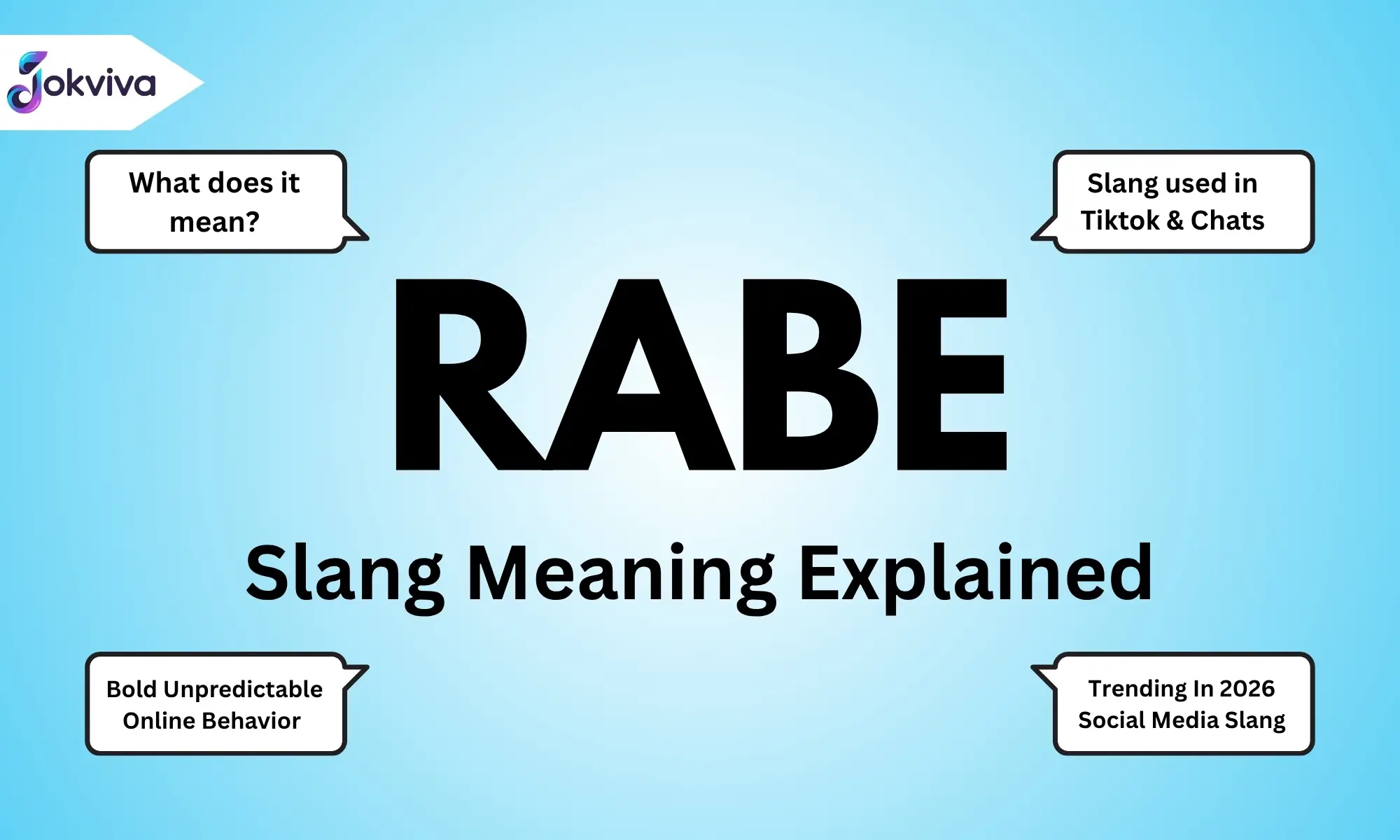
One term that has recently gained attention is rabe. Many people search for rabe meaning slang because they see it in TikTok comments, group chats, memes, and online conversations but are unsure what it actually means.

The interesting thing about rabe is that it has multiple meanings depending on the context. In one world, it refers to a vegetable used in cooking. 

In another, it has evolved into a modern slang word tied to boldness, confidence, unpredictability, and chaotic energy. That flexibility is exactly why the word keeps spreading online.

Unlike traditional dictionary words, internet slang grows naturally through conversation and social media trends. 

People adopt words because they sound expressive, funny, or emotionally accurate. Rabe has become one of those vibe-based slang terms that describe attitude more than exact meaning.

This guide explains the full rabe slang meaning, where the term came from, how people use it online, and when you should or should not use it yourself.

📑 Table of Content

Rabe Definition

Rabe Definition

The word rabe has more than one meaning depending on where and how it is used. In its most traditional sense, rabe refers to broccoli rabe, a green leafy vegetable commonly used in Italian cooking. However, the rabe meaning slang is something completely different and far more relevant to modern internet culture and everyday conversation today.

As a slang term, rabe is used in casual conversation, text messages, and online platforms to describe a specific kind of behavior, energy, or attitude. The rabe definition in slang context is flexible and depends heavily on tone, platform, and the relationship between the people using it. This is what makes understanding rabe both interesting and sometimes confusing for people who encounter it for the first time online.

The rabe slang meaning does not come from any formal dictionary. Like most modern slang, it developed through repeated use in online communities, street culture, and digital conversation. It has appeared across platforms like TikTok, WhatsApp group chats, and comment sections where informal slang evolves faster than any printed dictionary can record.

The literal meaning of rabe as a vegetable and the true meaning of rabe as a slang term exist in completely separate worlds. This article focuses on the slang version what it means, where it came from, and how to use rabe correctly in real conversations.

What Does Rabe Mean in Slang?

The rabe meaning in slang is best understood as a context-driven expression. Rabe is a modern slang term that people use to describe someone who is bold, unpredictable, or acting with a certain kind of audacious energy. When someone calls another person rabe, they are often pointing to behavior that stands out something daring, a little reckless, or surprisingly confident in a situation where most people would hold back.

The slang word rabe does not carry one fixed definition the way words in a standard dictionary do. Instead, the meaning depends on who is saying it, how they say it, and what the conversation is about. In some contexts, rabe means someone is acting fearlessly or impressively. In others, it suggests the person is being careless or going too far without thinking.

Rabe is informal slang that works more like a vibe word than a descriptive term. It tells you about the energy of a situation rather than giving you a precise definition. This is why people who search rabe meaning slang often find different answers across different platforms the meaning shifts based on the community using it.

Examples of rabe in slang use:

He walked into that meeting like he owned the place total rabe energy.
Stop being so rabe, you are going to get yourself into trouble with that attitude.
She handled that situation with full rabe confidence and everyone noticed immediately.

The slang rabe can shift from being a compliment to a mild warning depending entirely on tone and context.

Where Did the Slang Rabe Come From?

The exact origin of rabe as a slang term is difficult to trace because slang evolves through spoken language, regional communities, and online culture rather than through formal channels. Unlike words that enter the dictionary with a recorded first use, rabe emerged from street conversation and internet spaces where language moves fast and leaves few records behind.

Based on available information from platforms like Urban Dictionary and social media communities, the slang term rabe appears to have roots in urban and street culture where words are regularly repurposed to describe personality types and behavioral patterns. The rabe in urban and street context specifically refers to someone who operates outside expected norms bold, unpredictable, and unafraid of standing out in any environment.

The cultural impact of rabe as a slang word grew significantly when it started appearing on TikTok and other short-form video platforms. When content creators began using the term in captions, commentary, and reaction videos, it reached audiences who had never heard it in its original street context. This is a pattern seen with many viral slang terms they begin locally and spread globally through digital sharing.

The linguistic evolution of rabe follows the same path as words like savage, slay, and lowkey terms that started in specific communities and gradually entered mainstream conversation through social media. Understanding where rabe slang meaning comes from helps explain why its definition feels so flexible and context-dependent to newcomers encountering it for the first time.

Rabe Meaning in Social Media Context

The rabe meaning in social media is where most people first encounter this slang term today. On platforms like TikTok, Instagram, and Twitter, rabe used online tends to describe content, behavior, or people who display a specific kind of bold unpredictability that attracts attention and reactions from viewers.

In the meaning in social media context, rabe often appears in comments and captions when someone does something surprising, confident, or slightly chaotic. A creator who posts an unexpected opinion, takes a strong stance, or behaves in a way nobody predicted might receive comments saying that was so rabe or full rabe behavior in the best way. The online slang version of rabe has a generally admiring tone on most platforms it suggests the person or action stood out in a memorable way.

Rabe meaning in text follows similar patterns. In direct messages and group chats, the term appears when someone describes a bold move or an unpredictable choice. Rabe in text messages and everyday chats tends to be playful and casual rather than critical. When a friend says you were being so rabe last night, they usually mean it with a mix of amusement and mild disbelief at whatever happened.

The digital slang version of rabe has also picked up a symbolic meaning on certain platforms where it represents a personality type someone who is magnetic, slightly chaotic, and impossible to predict. This symbolic meaning gives rabe staying power beyond a simple reaction word because people apply it as a label rather than just a description of a single action.

Real examples of rabe used online:

TikTok caption: nobody does rabe energy like this guy.
Instagram comment: she is so rabe for posting that and I love every second of it.
Group chat message: bro went full rabe at the party and now everyone is talking about it.

Rabe in Urban and Street Culture

Rabe in urban and street culture carries a slightly different weight than the social media version. In street slang, rabe is used to describe someone with a specific kind of presence the type of person who commands attention without asking for it, who moves through spaces with confidence, and whose behavior is difficult to predict but always memorable.

Urban slang culture often uses rabe to describe people rather than actions. Saying someone is rabe in this context suggests they have the kind of personality that is both intimidating and magnetic. They are not necessarily aggressive but they carry an energy that makes others aware of them. The urban dictionary entries for rabe reflect this usage someone described as rabe is bold, slightly dangerous in their confidence, and never boring.

Street slang like rabe often gets applied to specific types of people within a community. The informal slang use in these spaces tends to be more specific than the broader social media version. In a street context, calling someone rabe might be a form of respect acknowledging that they operate on their own terms and handle situations in ways most people would not attempt.

The rabe meaning in english within urban culture has connections to older slang vocabulary around confidence and audacity. Words like raw, wild, and no-filter carry similar energy and rabe sits comfortably in that company. English slang in urban communities regularly borrows and repurposes terms this way giving existing sounds new meanings that reflect the values and experiences of the community using them.

Rabe Meaning in Music and Art

The rabe meaning in music and art shows how slang terms travel beyond conversation into creative expression. Rabe meaning in music appears in lyrics, artist names, and song titles where the term carries the same bold and unpredictable energy it has in street culture. Artists who identify with rabe energy or use the term in their work are typically positioning themselves as outside the mainstream raw, unfiltered, and operating on their own creative terms.

In music and art, rabe conveys an aesthetic as much as a personality type. An artist described as rabe is not just bold in behavior but bold in their creative choices. They take risks with their work, challenge expectations, and produce things that make audiences react strongly in one direction or another. This connects directly to the rabe slang meaning of unpredictability and audacity.

Visual artists and designers have also adopted rabe as a descriptor for work that feels deliberately rough, unpolished, or confrontational. In this creative context, rabe is informal shorthand for art that refuses to be conventional. The modern internet slang version of rabe has made this usage accessible beyond street-level art communities now anyone describing experimental or boundary-pushing creative work might reach for rabe as the right word.

Variations of rabe in creative contexts include phrases like rabe aesthetic, full rabe energy, and going rabe with a project all of which describe a commitment to bold, uncompromising creative choices. These slang usage patterns show how a word that started in conversation can expand into a broader cultural vocabulary that shapes how people talk about creativity and expression.

Rabe in Text Messages and Everyday Chats

Rabe in text messages is probably the most common place most people encounter this slang today. In casual texting and text messages and everyday chats, rabe functions as a quick shorthand for describing behavior that surprised, impressed, or slightly shocked the person sending the message. It requires no explanation between friends who already know each other’s communication style and shared references.

Using rabe correctly in everyday chats means understanding the tone of the conversation first. When rabe is informal slang used between close friends, it almost always lands as playful and affectionate even when it is technically describing chaotic behavior. The same word used in the wrong context or with the wrong tone can land as criticism or even as a mild insult depending on what the receiver reads into it.

Rabe in text conversations typically appears in one of three situations. The first is when describing what someone did that was unexpectedly bold. The second is when reacting to something surprising in real time. The third is when labeling a person’s overall energy or personality for someone who has not met them yet. All three uses rely on the receiver already having enough context about rabe meaning in text to interpret it correctly.

Real examples of rabe in everyday chats:

Did you see what she said to the boss? Pure rabe behavior honestly.
He showed up two hours late and acted completely unbothered so rabe.
She is actually rabe once you get to know her, nothing phases her at all.

Learn rabe meaning slang properly and these messages become instantly readable. Miss the context and they can feel confusing or even confrontational when none was intended.

Why rabe is trending in 2026 comes down to several factors that have combined to push this slang term from niche usage into wider recognition. The first is the continued dominance of TikTok as a platform where language spreads faster than anywhere else online. When a word gets used in a viral video or picked up by a creator with a large following, it can go from obscure to everywhere in days rather than months.

The second factor is the broader cultural appetite for words that describe bold, authentic, or unfiltered behavior. Modern slang in 2026 reflects a general cultural interest in people who are genuine, unpolished, and unapologetic. Rabe fits this perfectly because it describes exactly that kind of energy without needing a long explanation. Terms like rabe that carry a lot of meaning in a short package tend to thrive in digital communication where brevity is valued.

The third factor is the way internet slang communities document and spread new terms through dedicated pages, comment threads, and short-form content. People who encounter rabe for the first time and search rabe meaning slang find enough content to understand it quickly, which lowers the barrier to adoption. When a slang word is easy to learn and easy to use, it spreads more successfully than terms with complicated or contested meanings.

Viral slang terms like rabe also benefit from the fact that they feel fresh to new users even when they have existed in specific communities for years. The moment a word crosses from one community into another through a viral moment, it feels new to the new audience and that novelty drives further sharing and use across platforms like TikTok and beyond.

How to Use Rabe Correctly With Real Examples

Using rabe correctly requires understanding the context before reaching for the word. Because rabe meaning slang is flexible and the meaning can shift significantly based on tone and situation, the same word can function as a compliment, a warning, or a neutral observation depending entirely on how it is delivered.

Use rabe slang as a compliment when describing someone who handled a difficult situation with unexpected confidence, made a bold creative choice, or acted in a way that was impressive in its audacity. In these situations rabe reads as admiring and the person receiving the label will likely take it positively.

Use it as a neutral observation when simply describing someone’s personality or energy to another person. Saying she is very rabe in conversation style is not a judgment, it is a description that gives the listener useful information about what to expect.

When not to use rabe:

In formal or professional settings where slang is not appropriate
With people who are unfamiliar with the term and might misread it as criticism
In written communication where tone cannot be conveyed and misunderstanding is likely
When describing someone’s negative behavior that has caused real harm rabe is too casual for serious situations

Real examples of rabe used correctly:

He quit the job without another one lined up total rabe move but somehow it worked out.
She walked into the negotiation and doubled her asking price immediately full rabe energy.
I love how rabe she is about her opinions, she never pretends to feel differently than she does.
That was a little too rabe for the situation honestly, you might want to dial it back next time.

Understanding rabe meaning fully means recognizing that rabe positive usage is more common than negative in most digital spaces but the negative reading is always possible depending on delivery.

Rabe Meaning Slang Across Different Countries

Rabe meaning slang across different countries varies significantly because slang culture is always shaped by the local language, values, and social context in which it develops. While rabe slang meaning in English-speaking countries generally refers to bold or unpredictable behavior, the word and similar sounds carry different associations in other linguistic and cultural contexts.

In English slang communities across the United States, United Kingdom, and Australia, rabe tends to carry the same general meaning someone or something with a bold, audacious, or unexpectedly confident energy. However, the specific connotations can differ. In American urban slang, rabe leans more toward describing someone who is impressively fearless. In British usage, it can carry a slightly more cautious edge acknowledging the boldness while noting it might go too far.

In non-English speaking countries where internet slang from English spreads through social media, rabe tends to be adopted with the meaning it carries on the platform where it was first encountered. A teenager in Brazil who first sees rabe in a TikTok comment will carry that definition forward regardless of any regional street culture associations the word might have elsewhere.

Slang terms like rabe that travel through digital platforms tend to flatten regional differences over time. As more people encounter the word through the same content, the meaning shifts toward a more universal definition that works across contexts. This is the linguistic evolution of rabe playing out in real time a word that once meant specific things in specific communities gradually acquires a global meaning shaped by digital culture rather than geographic location.

What Rabe Means to Gen Z vs Millennials

What rabe means to Gen Z vs Millennials reveals a generational gap in how slang is adopted, used, and understood. For Gen Z, rabe is part of a broader vocabulary of short, expressive slang terms that describe personality and energy. It sits alongside words like unhinged, chaotic, and main character as a way of labeling a specific kind of bold behavior that Gen Z culture simultaneously celebrates and gently mocks.

For Millennials, rabe is more likely to be an unfamiliar term something encountered in a comment section or a younger colleague’s message that requires a quick search to understand. When Millennials do adopt rabe, they tend to use it more deliberately and with more self-awareness than Gen Z users who have grown up with it as part of natural conversation. The slang usage patterns differ accordingly Gen Z uses rabe casually and frequently while Millennial usage tends to be more occasional and often slightly ironic.

This generational difference reflects broader patterns in how modern slang spreads. Gen Z adopts new slang quickly because they are the primary creators and consumers of the content where viral slang terms first appear. Millennials encounter the same terms later and through different channels, which shapes how they understand and use them.

Words like rabe that originate in Gen Z digital spaces eventually reach Millennial awareness but often with a slight delay and a different feeling attached. By the time a word becomes easily understood across both generations, it is usually already fading in the communities where it started a pattern that flexible slang terms follow consistently across every generation of internet culture.

Is Rabe a Real Word or Internet-Created Slang?

Is rabe a real word or internet-created slang is a question that gets to the heart of how language and legitimacy work in the digital age. The answer is that rabe is both it is a real word with a real history outside of slang and it is also a genuine piece of internet slang that developed independently through online communities.

As a real word, rabe refers to broccoli rabe, the bitter Italian vegetable. It also exists as a surname of German origin meaning raven. These are established, dictionary-confirmed meanings that have nothing to do with the rabe slang meaning most people search for in 2026.

As internet slang, rabe developed separately from these existing meanings. The slang term rabe grew through online and street culture in a way that has no direct connection to the vegetable or the surname. This kind of parallel development is common in slang words get repurposed, sounds get borrowed, and new meanings layer on top of existing ones without any intentional connection.

Rabe is informal slang that exists in that interesting linguistic space where it is used widely enough to be consistently understood within communities but has not yet reached the kind of formal recognition that would get it added to major dictionaries. Platforms like Urban Dictionary have documented the slang usage but these crowd-sourced definitions do not carry the same weight as formal lexicographic recognition.

Whether casual slang like rabe ever makes it into formal dictionaries depends on how long it maintains cultural relevance and whether its usage becomes widespread enough to be considered part of standard informal English. Based on current trends, rabe has the qualities that tend to give slang lasting power.

Positive vs Negative Uses of Rabe in Conversation

Rabe positive usage is significantly more common than negative usage in most digital and social contexts. When people use rabe to describe someone or something, they are usually expressing a mixture of admiration, amusement, and respect for the boldness being described. The word carries a baseline of appreciation for audacity that tilts most uses toward the positive end of the spectrum.

However, rabe in urban and street contexts can carry a warning quality when used with certain tones or in specific situations. Saying someone is being too rabe introduces a note of caution acknowledging the boldness while suggesting it has crossed from impressive into problematic territory. This is the negative register of the word and it appears less frequently but is important to recognize.

Positive uses of rabe:

Describing someone who handled pressure confidently and unexpectedly well
Acknowledging a creative choice that was risky but paid off
Labeling a person’s overall energy as bold, magnetic, and memorable
Celebrating an action that most people would have been too cautious to take

Negative uses of rabe:

Describing behavior that was bold to the point of being reckless or harmful
Suggesting someone is acting without enough consideration for consequences
Using it to note that a situation escalated further than it needed to
Pointing out that someone’s audacity crossed a line in a specific context

Is rabe positive negative or offensive ultimately depends on the speaker, the subject, and the audience. In most cases it is neutral to positive but using rabe correctly means staying aware of how the specific tone of a conversation might shift its reception in real time.

When Not to Use Rabe

When not to use rabe is as important as understanding what the word means. Because rabe is informal slang, there are clear situations where reaching for this term will either confuse the audience, send the wrong message, or undermine the seriousness of what is being discussed.

The most obvious situation is formal or professional communication. Emails, reports, presentations, and any workplace communication where professional tone is expected are not appropriate settings for rabe or any similar slang. Even if the culture of a workplace is casual, using active slang terms in written professional communication risks being read as unprofessional or unclear.

When rabe meaning slang might cause confusion, it is better to avoid it. If you are communicating with someone significantly older, from a different cultural background, or unfamiliar with current internet vocabulary, using rabe without explanation will likely produce confusion rather than connection. Clear communication serves the conversation better than demonstrating familiarity with current slang.

When describing genuinely harmful or serious behavior, rabe is too casual and too admiring in its connotations to be appropriate. If someone has done something that caused real damage or hurt, describing it as rabe minimizes the seriousness and may come across as endorsing the behavior rather than acknowledging its impact.

Common mistakes people make when using rabe:

Using it in formal writing where it sounds out of place and unprofessional
Applying it to serious situations where casual slang is tone-deaf
Using it with unfamiliar audiences who may misread the intent entirely
Overusing it to the point where it loses its impact and begins to feel hollow
Using it sarcastically without clear signals that sarcasm is intended

Rabe Meaning Food

Broccoli rabe is a green cruciferous vegetable that is widely used in Italian and Italian-American cooking. It is related to the turnip rather than to regular broccoli despite the name similarity. Rabe in the food context refers specifically to this bitter, leafy green that has a distinctive sharp flavor quite different from the milder taste of regular broccoli.

Broccoli rabe is a staple ingredient in dishes like pasta with sausage and rabe, sauteed rabe with garlic and olive oil, and various Italian-American sandwiches and side dishes. It is nutritionally dense and high in vitamins, making it a popular choice in health-conscious cooking as well as in traditional Italian recipes.

The rabe meaning in food contexts has nothing to do with slang and anyone searching for cooking information using this term will find a completely separate world of recipes, nutritional information, and culinary tradition. The dictionary definition of rabe in this context is straightforward and unambiguous it is a vegetable, it grows in the ground, and it tastes slightly bitter in a way that pairs well with rich flavors like sausage, garlic, and olive oil.

This is one reason why rabe meaning slang searches sometimes surface food-related results alongside slang explanations. The word genuinely exists in both worlds simultaneously and search engines serve both sets of results to people depending on their query context and search history.

Rabe Meaning Engineer

In engineering and technical contexts, rabe appears as a surname associated with specific professionals and researchers rather than as a technical term itself. There is no standard engineering definition of rabe as a standalone technical word its appearance in engineering contexts is almost always as a proper name rather than as terminology.

The confusion between rabe meaning slang, rabe meaning food, and rabe in engineering contexts reflects a broader challenge with short words that exist across multiple domains. When a word is only four letters long and appears in several different fields, search results naturally surface all of these meanings simultaneously, which creates the impression that the word has more technical significance than it actually does.

For anyone who encountered rabe in an engineering document, academic paper, or technical context, the most likely explanation is that it is a surname possibly a researcher, author, or professional whose work is being cited or discussed. The dictionary does not list any standard engineering definition for rabe as a common noun or technical term.

Understanding this distinction is part of understanding rabe meaning fully. The slang meaning, the food meaning, and the engineering appearance of the word are all real but they operate in completely separate contexts and none of them inform the others. Different meanings of rabe based on context require the reader to identify which world they are in before deciding which definition applies.

Is Rabe Positive Negative or Offensive?

Is rabe positive negative or offensive is a question that comes up frequently because the word sits in an ambiguous space where intent and reception do not always align. The honest answer is that rabe is generally positive to neutral in most modern usage but has the potential to land as negative or mildly offensive depending on context and delivery.

In the majority of cases where people encounter rabe slang meaning online, the word is being used admiringly. Calling someone rabe is usually a way of acknowledging their boldness, confidence, or unpredictability as something interesting and magnetic. The rabe positive reading is the dominant one across TikTok, social media, and casual text conversation.

The word becomes potentially negative when used to describe behavior that the speaker considers reckless, inconsiderate, or too chaotic. In these cases rabe still carries its core meaning of audacity but the tone shifts to suggest the audacity has gone too far. This negative reading requires context to be clearly understood without additional signals, most people will default to reading rabe as a compliment.

Is rabe offensive in any direct or targeted sense? Not inherently. Unlike slang terms that are built on stereotypes or used to demean specific groups of people, rabe describes behavior and energy rather than identity. It does not carry a built-in discriminatory meaning and is not considered a slur or an offensive term in standard usage.

The main risk with rabe is misreading or misdelivery using it in a way where the recipient interprets a neutral or positive intent as criticism. Using rabe correctly means being aware of this gap between intent and possible reception and adjusting communication accordingly.

Why the Meaning of Rabe Changes So Often

Why the meaning of rabe changes so often is a question about how slang works more generally. Slang evolves faster than formal language because it lives in communities rather than in institutions. There is no authority deciding what rabe means the meaning is set collectively by the people using the word and it shifts as those communities change, grow, or move to different platforms.

Modern slang term life cycles follow a recognizable pattern. A word starts with a specific meaning in a specific community. It spreads through digital content to wider audiences who adopt it with slightly different interpretations. Those interpretations layer on top of each other until the word has a range of associated meanings that feel related but are not identical. This is exactly what has happened with rabe meaning slang.

The speed of this evolution has accelerated significantly with the rise of TikTok and other short-form content platforms. A slang word can move through its entire life cycle from niche to mainstream to overused to dated in a matter of months rather than years. Words like rabe that are short and flexible tend to survive these cycles better than words with narrower meanings because they can absorb new associations without losing their core identity.

Flexible slang also changes meaning because different communities adopt it for different purposes. The street slang meaning of rabe and the TikTok meaning are related but not identical because they developed in different contexts for different communicative purposes. Neither version is more correct than the other they are both valid expressions of how the word functions within their specific communities.

Common Mistakes People Make When Using Rabe

Common mistakes people make when using rabe fall into several recognizable categories that are worth knowing before you start using the term in your own communication.

The first and most common mistake is using rabe in formal contexts where slang is not appropriate. Because rabe is informal slang that belongs to casual conversation and digital communication, dropping it into professional emails, academic writing, or formal speech sounds jarring and undermines the credibility of the writer.

The second mistake is assuming a universal understanding. Not everyone knows what rabe means and using it without context with an unfamiliar audience produces confusion rather than connection. Rabe meaning slang is not yet widely enough known to be assumed as common vocabulary across all age groups and backgrounds.

The third mistake is overusing the word to the point where it loses impact. Like all expressive slang, rabe works best when it is used selectively. When every bold action or confident person gets labeled rabe, the word stops feeling specific and starts feeling like filler.

The fourth mistake is using rabe sarcastically without clear signals. Because the word defaults to a positive reading, sarcastic use requires obvious tonal cues to be understood correctly. In text-based communication where those cues are difficult to convey, sarcastic rabe very often lands as a genuine compliment when criticism was intended.

The fifth mistake is applying rabe to serious situations where its casual, admiring connotations are completely inappropriate. When someone has done something that caused real harm, describing it as rabe minimizes the impact and can be deeply tone-deaf to anyone affected by the situation.

Misunderstandings about rabe usually come from these same sources wrong context, wrong audience, wrong tone. Understanding rabe meaning fully means knowing not just what it means but when and how it should and should not be used in real communication.

Will Rabe Slang Last or Fade Out?

Will rabe slang last or fade out depends on several factors that determine the longevity of any slang term. The evidence suggests rabe has qualities that give it staying power but also faces the same pressures that eventually fade most slang back into obscurity.

The factors in favor of rabe lasting include its versatility, its brevity, and the broad applicability of the concept it describes. A four-letter word that can describe bold behavior, confident energy, and unpredictable personality across many contexts is more useful than a word with a narrow single-use meaning. Flexible slang survives longer than rigid slang for exactly this reason.

The factors working against rabe lasting include the speed at which internet slang cycles through new vocabulary and the tendency of widely adopted slang to feel overused and dated quickly. Once a word moves from specific community usage into general mainstream adoption, it often loses the freshness that made it appealing in the first place. Viral slang terms frequently peak and decline within a single year.

The most likely outcome is that rabe slang meaning will remain in active use within the communities where it originated for longer than it remains relevant in mainstream digital conversation. This is the typical trajectory slang returns to its roots after its mainstream moment passes. People who have used rabe for years in specific communities will continue to do so long after it stops trending on TikTok.

Understanding rabe as a living piece of language means accepting that its current form may not be its final form. Slang that lasts tends to evolve alongside the communities that use it, taking on new meanings and associations over time while retaining its core identity. Whether rabe will do the same remains to be seen but its current trajectory suggests it has more life ahead of it than behind it.

Final Thoughts on Rabe Meaning Slang

Understanding rabe meaning slang is really about understanding modern internet culture. The word does not have one fixed definition. Instead, it describes a type of bold, unpredictable, confident, or chaotic energy that people recognize instantly online.

Depending on tone, rabe can sound:

Admirable
Slightly critical

Most of the time, it is used positively in social media posts, texting, and casual conversation. Like many modern slang terms, its meaning continues to evolve as more people use it across different platforms and communities.

If you see the word online, pay attention to the situation and tone before reacting. Context is the key to understanding internet slang correctly. 😊

FAQs

What does rabe mean in slang?

In slang, rabe usually describes someone who is bold, confident, unpredictable, or acting with chaotic energy. The meaning depends on context and tone.

Is rabe a positive or negative slang word?

Rabe is mostly used in a positive or playful way online. However, it can sound negative if someone uses it to describe reckless behavior.

Where did the slang word rabe come from?

The exact origin is unclear, but rabe grew through internet culture, social media platforms, urban slang, and online conversations over time.

Is rabe an official dictionary word?

Yes and no. Rabe is a real dictionary word for broccoli rabe, but the slang version is informal internet-created language not officially recognized everywhere.

How do people use rabe in text messages?

People use rabe in texts to describe bold or surprising actions. Example: “He skipped work for a road trip — total rabe behavior.”

Sarah Bennett
Previous Post
Older Mistakes

Funny Ladder Puns, Jokes & One-Liners to Reach New Heights of Laughter

Fresh Garbage

What Does FN Mean in Text, Slang & Online Chats? FN Meaning Explained

Next Post

Leave a Comment

✨ Surprise Picked ✨

Generating magic...

✓ Automatically Copied